
Oman's New Provident Scheme for Expatriate Employees: 9% Employer Contribution Starting 19 July 2027
Article
In short
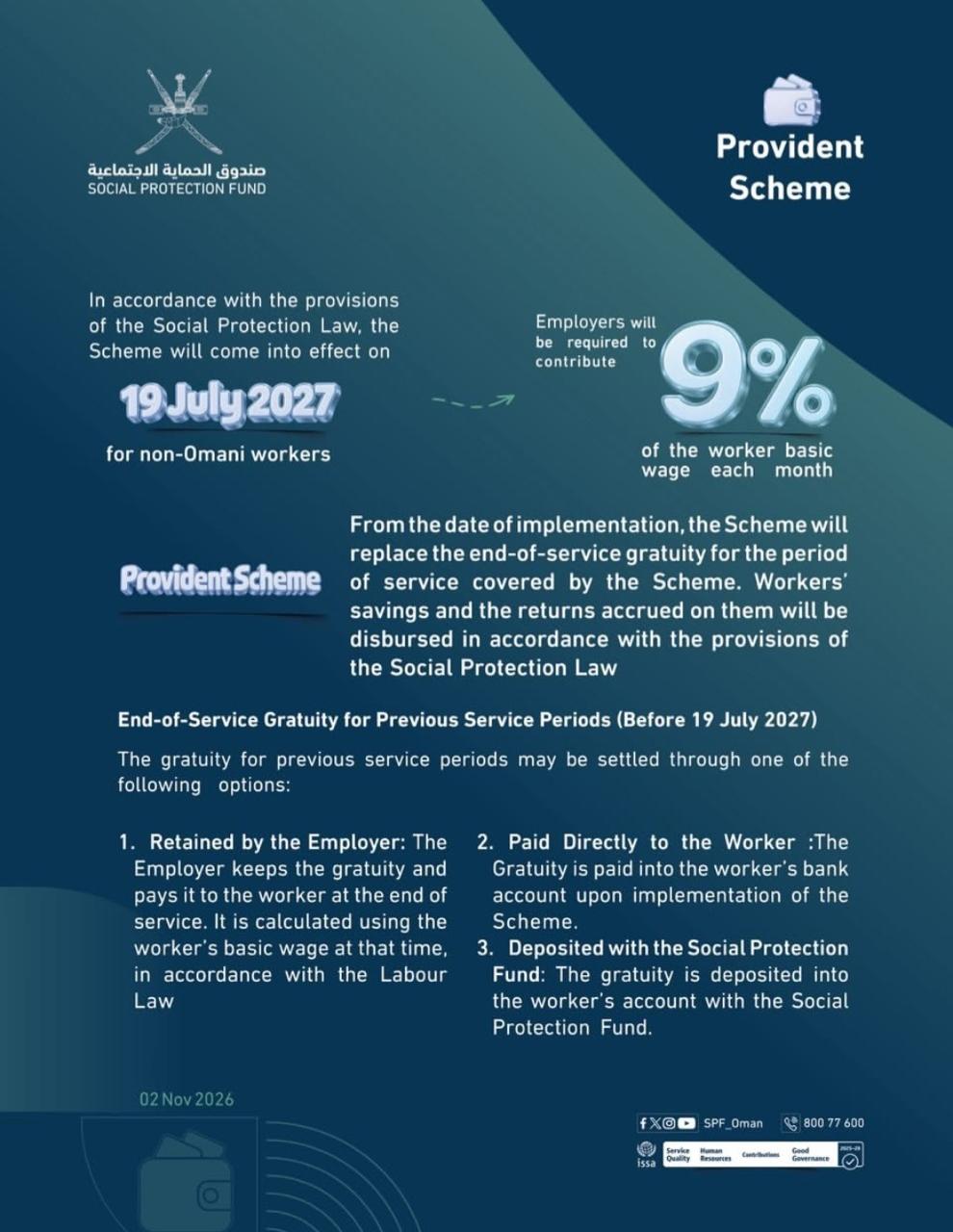
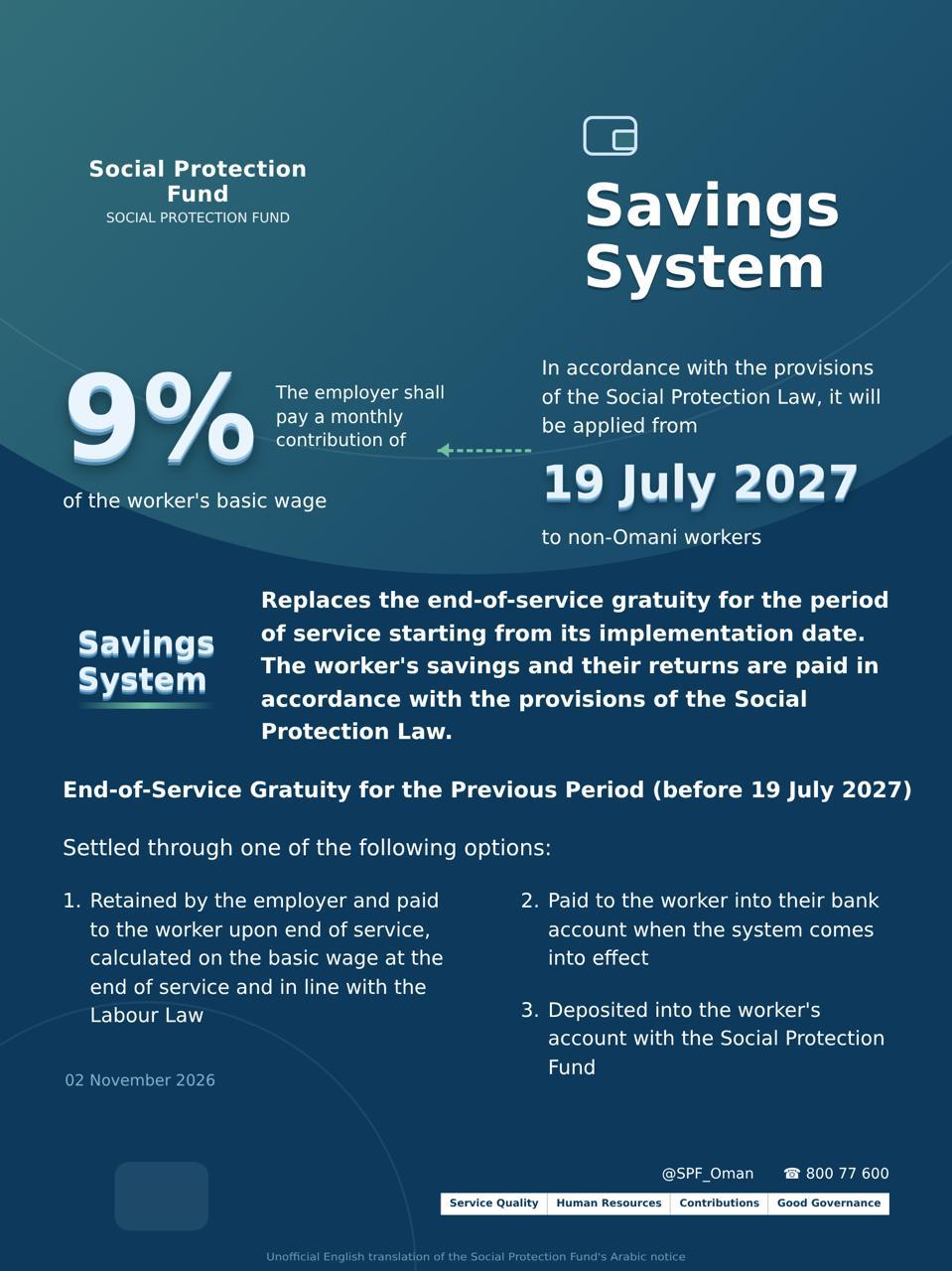
- Oman is introducing a Provident Savings Scheme for expatriate employees under the Social Protection Law, effective 19 July 2027.
- Employers must contribute 9% of each eligible expatriate employee's basic monthly wage — it is not deducted from the employee's salary.
- Gratuity earned before 19 July 2027 can be retained, paid out, or transferred to the Social Protection Fund.
Oman is introducing a new Provident Savings Scheme for expatriate employees under the Social Protection Law. The change reshapes how end-of-service benefits are accrued for non-Omani workers and introduces a mandatory employer contribution. For businesses employing expatriates, understanding the scheme early is essential to keep HR, payroll, and accounting processes aligned with the new framework.
What is Oman's new Provident Scheme?
The Provident Savings Scheme is a structured savings arrangement established under the Social Protection Law. It applies to non-Omani (expatriate) workers and is designed to provide a more organised, fund-based approach to end-of-service benefits, replacing the traditional gratuity accrual for future service periods.
The government is introducing the scheme to strengthen long-term financial protection for expatriate employees and to bring Oman's employment benefits framework closer to international social protection standards. Rather than relying solely on a lump-sum gratuity payable at the end of employment, eligible employees will accumulate savings over time within a regulated fund.
Understanding the 9% employer contribution
Under the new scheme, employers must contribute 9% of each eligible expatriate employee's basic monthly wage. Importantly, this contribution is paid by the employer — it is not a deduction from the employee's basic salary.
A simple example: if an expatriate employee earns a basic salary of OMR 500, the employer contribution at 9% amounts to OMR 45 per month, or OMR 540 per year. These contributions accumulate within the employee's individual account under the scheme.
When does the scheme come into effect?
The scheme becomes effective on 19 July 2027. Before this date, employers should review their workforce data, payroll systems, and gratuity calculations. After the effective date, the new contribution framework applies to eligible expatriate employees for service periods going forward.
What happens to existing end-of-service gratuity?
Gratuity accumulated for service periods before 19 July 2027 can be settled through three options:
- Retained by the employer: The employer retains the accrued gratuity and pays it when the employee leaves. The calculation follows applicable Labour Law provisions and uses the employee's basic wage at the end of service.
- Paid directly to the employee: The employer pays the accumulated gratuity directly into the employee's bank account when the new scheme comes into effect.
- Transferred to the Social Protection Fund: The employer deposits the accumulated gratuity into the employee's individual account with the Social Protection Fund.
This distinction is important: previous service entitlements are handled separately from the savings that accumulate under the new scheme from 19 July 2027 onwards.
How will the scheme affect employers?
The practical implications for businesses in Oman include reviewing employee records and basic salary structures, calculating existing end-of-service gratuity liabilities, and preparing payroll and accounting systems to handle the new monthly contribution. Employers should also plan for the additional monthly cost and coordinate between HR and finance departments to ensure a smooth transition before July 2027.
What expatriate employees should know
For expatriate employees, the new system offers a more structured way to accumulate savings over the course of employment, rather than relying on a single gratuity payment at the end of service. Monthly savings accumulate within the scheme, and investment returns are treated in accordance with the Social Protection Law. Accumulated savings are disbursed according to the provisions of the Law when the employee leaves.
How businesses can prepare for July 2027
Preparation should begin well before the implementation date. Businesses should audit their employee records, confirm which staff fall within scope, review basic salary definitions used for the calculation, and update payroll and accounting systems. Clear coordination between HR and finance will help avoid errors and ensure the transition is managed efficiently.
How Leaderly can help
Leaderly Auditors and Consultants supports businesses in reviewing payroll and accounting processes, calculating gratuity liabilities, and preparing for the new contribution framework. Our audit, accounting, and advisory teams can help you assess readiness, update systems, and plan the transition in line with the Social Protection Law.
Further implementation details are subject to official guidance from the Social Protection Fund. Businesses should confirm the latest requirements as the effective date approaches.
Official Circular & Summary Infographic
View or download the official Social Protection Fund notice and summary circular regarding the 9% expatriate Provident Savings Scheme.
Frequently Asked Questions
Based on the Social Protection Law (Royal Decree 52/2023) and official Social Protection Fund announcements. Further implementation details are subject to official guidance. Always confirm the latest requirements with the Social Protection Fund.
Disclaimer: Leaderly blog posts are informational articles written by different authors from the broader Leaderly team. They do not constitute consultancy or professional advice and are not a substitute for tailored guidance. For advice specific to your circumstances, please contact us to arrange a formal engagement.
Preparing for Oman's new Provident Scheme? Talk to our team.
Talk to our tax team