Muscat Vision2040 CyberTrust Framework and the New Standard of Customer Confidence in Oman
Muscat Vision2040 CyberTrust Framework as the Foundation of Modern Customer Trust
Why security is no longer an IT issue but a leadership obligation
Muscat Vision2040 CyberTrust Framework is becoming a defining pillar of how Omani companies earn, protect, and sustain customer trust in an increasingly digital economy. As Oman advances toward Vision 2040, customers are no longer evaluating businesses solely on price or service quality. They now actively assess whether their personal data, payment information, and commercial interactions are secure. For SMEs in Muscat and across the Sultanate, this shift represents a fundamental transformation in how trust is built. A single data breach, delayed response, or unclear governance structure can undermine years of reputation building. Business owners often underestimate this risk, viewing cybersecurity as a technical concern rather than a strategic responsibility. In reality, customer confidence is now directly linked to governance, internal controls, and leadership decisions. When customers see strong systems, transparent processes, and responsible handling of information, they remain loyal. When they sense weakness, hesitation, or disorganization, they leave. The Muscat Vision2040 CyberTrust Framework reflects Oman’s recognition that secure, well-governed companies are essential for national competitiveness, foreign investment, and sustainable SME growth. Trust today is not promised through words but demonstrated through systems that consistently protect the interests of customers and stakeholders.
Muscat Vision2040 CyberTrust Framework and the Commercial Cost of Weak Security
How financial exposure grows when controls are neglected
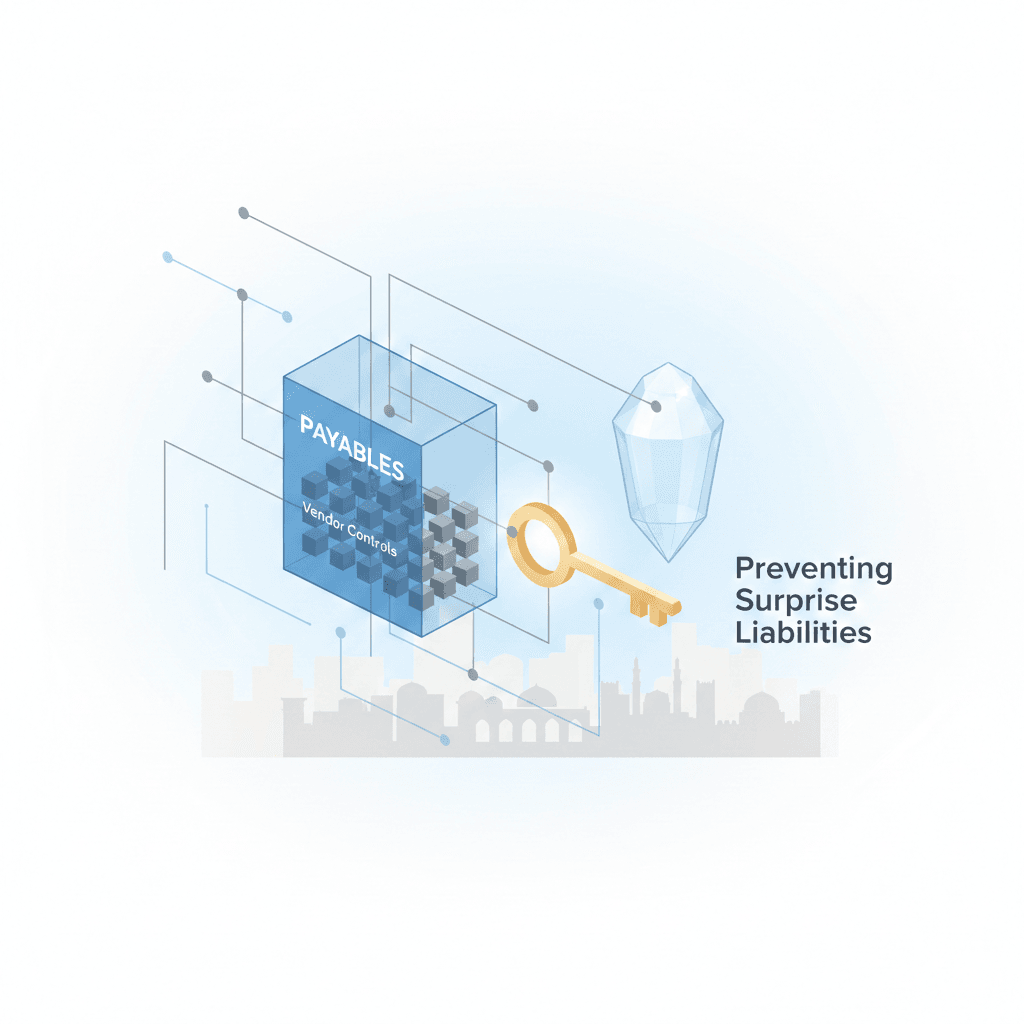
Muscat Vision2040 CyberTrust Framework also exposes the often-hidden financial consequences of weak security and governance practices. Many SMEs believe security failures only affect large corporations, yet smaller firms frequently face the most severe damage because they lack financial buffers, legal teams, and crisis management capacity. A breach can immediately trigger regulatory scrutiny, contractual disputes, VAT record inconsistencies, and disrupted operations. When accounting systems and transaction data are compromised, the financial ripple effect reaches audit readiness, cash flow accuracy, and tax compliance. In Oman’s evolving regulatory environment, authorities expect businesses to maintain reliable records, accurate reporting, and verifiable controls. Weak security directly threatens these obligations. For finance managers and entrepreneurs, the link between cybersecurity and financial stability is now undeniable. Every weakness in system controls increases exposure to fraud, misstatement, and operational shutdown. Customers who experience delays, misinformation, or compromised data quickly lose confidence and shift their business elsewhere. The Muscat Vision2040 CyberTrust Framework recognizes that strong security is not merely protective; it is a financial stabilizer that shields SMEs from cascading commercial and regulatory risks.
Muscat Vision2040 CyberTrust Framework as a Competitive Advantage for SMEs
Trust-driven growth in a connected Omani marketplace
Muscat Vision2040 CyberTrust Framework is not simply about preventing damage; it is a powerful driver of competitive advantage. In Oman’s increasingly interconnected marketplace, SMEs that demonstrate disciplined governance and robust security practices stand out as reliable partners. Customers, investors, and suppliers prefer working with companies that provide assurance, consistency, and transparency. When SMEs implement structured internal controls, clear data management policies, and secure financial systems, they communicate professionalism far beyond their size. This credibility supports easier access to financing, smoother negotiations with strategic partners, and stronger positioning in tender processes. Customers feel confident sharing information, committing to long-term contracts, and recommending the business within their networks. Over time, trust compounds into measurable growth. Companies aligned with the Muscat Vision2040 CyberTrust Framework become magnets for opportunity because they reduce uncertainty in every transaction. They show that leadership understands risk, respects compliance, and invests in sustainable operations. In a market where many SMEs still operate informally, disciplined security and governance practices quickly separate resilient businesses from vulnerable ones.
Muscat Vision2040 CyberTrust Framework and the Role of Leadership Governance
How management structure determines security outcomes
Muscat Vision2040 CyberTrust Framework places leadership governance at the center of effective security. Technology alone cannot protect customer trust. The true driver of resilience lies in how owners, directors, and managers design accountability, reporting structures, and decision-making authority. When roles are clearly defined, financial oversight is consistent, and operational procedures are documented, vulnerabilities shrink. Conversely, when responsibilities are informal, documentation is missing, and decisions are centralized without review, security weaknesses multiply. SMEs often operate under intense time pressure, leading leaders to postpone formal governance structures. Yet it is precisely these structures that ensure continuity when challenges arise. From audit readiness to VAT compliance and corporate tax planning, every financial obligation depends on reliable systems and verifiable controls. Strong governance reinforces security by ensuring that controls are tested, updated, and monitored. Leaders who align with the Muscat Vision2040 CyberTrust Framework understand that trust is not created by isolated initiatives but by an organizational culture of responsibility, discipline, and continuous improvement.
Muscat Vision2040 CyberTrust Framework in Daily SME Operations
Turning strategy into practical business protection
Muscat Vision2040 CyberTrust Framework becomes truly valuable when it is embedded into daily SME operations. This begins with secure accounting systems, disciplined document management, and controlled access to financial records. Every invoice, payroll file, customer contract, and tax submission is a potential exposure point if not properly safeguarded. Finance managers must ensure that internal controls extend across procurement, revenue recognition, expense approval, and reporting processes. Advisory engagement becomes essential here, helping businesses assess operational risk, evaluate system integrity, and strengthen weak points before problems surface. When due diligence is conducted thoroughly, and controls are documented, companies gain visibility over vulnerabilities that would otherwise remain hidden. This practical alignment between operations and security builds customer trust organically. Clients see consistency in service delivery, accuracy in billing, and professionalism in communication. These everyday experiences shape their perception of reliability far more than marketing claims. The Muscat Vision2040 CyberTrust Framework thrives in such disciplined environments where security supports performance rather than obstructs it.
Muscat Vision2040 CyberTrust Framework as a Long-Term Growth Enabler
Securing future expansion through resilience
Muscat Vision2040 CyberTrust Framework ultimately functions as a long-term growth enabler for Omani SMEs. As companies expand, open new branches, onboard more customers, and pursue regional partnerships, operational complexity increases. Without strong security and governance foundations, growth amplifies risk instead of opportunity. Systems that work for a small team collapse under scale if controls are not reinforced. Customers who once trusted the business may lose confidence as service inconsistencies emerge. By contrast, companies that integrate security, governance, and financial discipline from the beginning grow with stability. They can respond to regulatory changes, investor scrutiny, and market volatility with confidence. Strategic advisory, valuation support, and liquidation planning all depend on accurate data and reliable controls. When leaders commit to the Muscat Vision2040 CyberTrust Framework, they are not simply protecting today’s customers; they are constructing tomorrow’s enterprise with foresight, resilience, and credibility.
Customer trust in Oman’s modern economy is no longer built on relationships alone. It is built on evidence of responsibility, consistency, and protection. The Muscat Vision2040 CyberTrust Framework reflects this reality by positioning security as a core business competency rather than a technical afterthought. For SMEs, the framework provides a practical pathway to strengthen operations, stabilize finances, and reinforce credibility across every stakeholder interaction. When security, governance, and financial discipline move together, businesses do not merely survive; they develop the confidence required to compete, expand, and lead in their markets.
For business owners, finance managers, and entrepreneurs across Muscat and Oman, the real value of the Muscat Vision2040 CyberTrust Framework lies in its clarity. It transforms abstract goals of customer trust into measurable actions embedded in daily operations. By committing to strong internal controls, reliable financial systems, and informed advisory support, SMEs protect their customers while building enterprises capable of long-term success. Trust becomes not a promise but a visible, sustained business outcome.
#Leaderly #MuscatVision2040CyberTrustFramework #Oman #Muscat #SMEs #Accounting #Tax #Audit