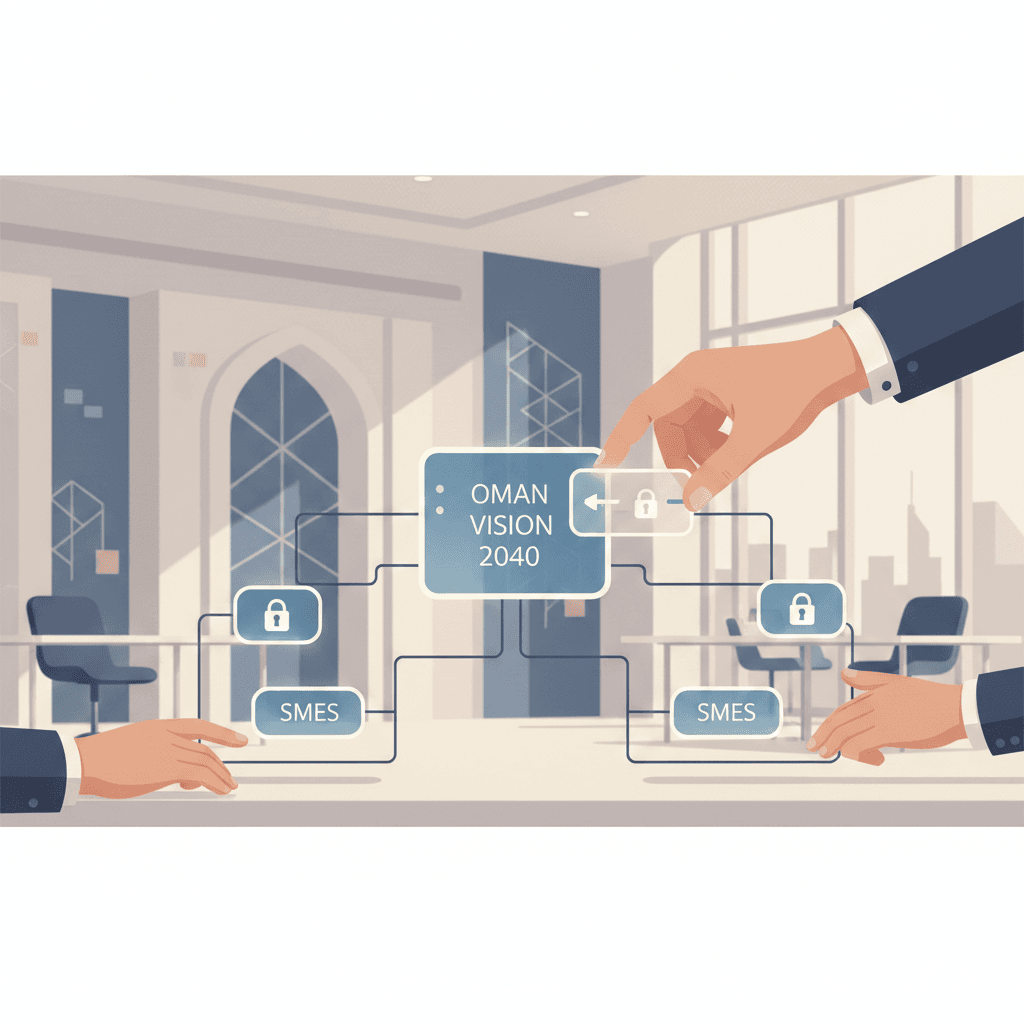
Muscat Hybrid Work Security Strategy for Vision 2040 Business Continuity in Oman
Muscat Hybrid Work Security Strategy as a Leadership Imperative
Why Vision 2040 makes secure hybrid operations a board-level priority
Muscat Hybrid Work Security Strategy is no longer a technical discussion reserved for IT departments; it has become a leadership obligation directly tied to Oman’s Vision 2040 objectives of productivity, diversification, and global competitiveness. For Omani business owners and SME founders, the move toward remote and hybrid work was accelerated by necessity, but its permanence now requires formal structure, financial oversight, and risk governance. Hybrid teams introduce new exposures: unmanaged data flows, fragmented accountability, undocumented access rights, and blurred internal controls. When leadership fails to frame these risks within a coherent operational strategy, financial stability and regulatory compliance are quietly undermined. A well-designed Muscat Hybrid Work Security Strategy anchors technology decisions to governance, people management, and financial discipline rather than treating security as a separate function.
Oman’s regulatory environment is maturing rapidly, particularly around data protection, VAT reporting, corporate taxation, and internal audit expectations. Remote work directly affects how transactions are recorded, how approvals are documented, and how financial information is protected. SMEs that ignore this connection often experience errors in VAT filings, delayed closings, and unexplained cost overruns because access and documentation controls were not adapted to hybrid workflows. Leaders who integrate their Muscat Hybrid Work Security Strategy with financial policies ensure that every remote process aligns with accountability standards expected by banks, investors, and regulators. This alignment supports sustainable growth while protecting the company’s reputation in a competitive market.
From a strategic perspective, Vision 2040 demands that Omani enterprises operate with resilience and scalability. Hybrid models support talent retention and expansion beyond geographic limits, but only if risk exposure is deliberately managed. The Muscat Hybrid Work Security Strategy becomes the structural bridge between operational flexibility and financial reliability. It establishes decision rights, approval hierarchies, reporting responsibilities, and escalation paths that function regardless of where employees work. When security design is embedded into management culture, business continuity becomes predictable instead of reactive. SMEs that take this leadership-driven approach position themselves as credible, stable partners in Oman’s evolving economic landscape.
Building Financially Aligned Controls within the Muscat Hybrid Work Security Strategy
Integrating cyber discipline with accounting and regulatory structure
At the core of an effective Muscat Hybrid Work Security Strategy lies the integration of financial controls with digital access management. Hybrid operations often expose gaps between who is authorized to initiate transactions, who reviews them, and who records them. These gaps translate directly into accounting risk. For example, remote approval chains that are not clearly defined allow unauthorized expenditures, incomplete documentation, and delayed reconciliations. SMEs in Oman must therefore redesign approval workflows so they function seamlessly across digital platforms while maintaining strict segregation of duties. This approach strengthens the reliability of financial statements and protects leadership from unpleasant surprises during audits or due diligence reviews.
Tax compliance in a hybrid environment introduces additional complexity. VAT reporting depends heavily on accurate, timely transaction data. When invoices, contracts, and delivery confirmations are processed across multiple locations and devices without standardized controls, inconsistencies multiply. A robust Muscat Hybrid Work Security Strategy addresses this by enforcing uniform document storage, encryption standards, and audit trails that preserve the integrity of financial records. This not only simplifies VAT submissions but also prepares the business for Oman’s corporate tax environment, where documentation quality and traceability are increasingly scrutinized. Sound digital controls therefore become an extension of prudent tax management rather than an isolated technical exercise.
From an advisory standpoint, businesses preparing for valuation, restructuring, or investor engagement benefit significantly from strong hybrid security governance. Potential partners and financiers evaluate how well a company controls its information, protects its financial data, and enforces internal policies. A mature Muscat Hybrid Work Security Strategy signals operational discipline and reduces perceived risk. It also lowers the cost of external audits and due diligence, since documentation is readily available and transaction histories are reliable. For growing SMEs, this creates a tangible financial advantage that directly supports expansion goals under Vision 2040.
Operationalizing the Muscat Hybrid Work Security Strategy Across Teams
Turning policy into everyday management practice
The effectiveness of a Muscat Hybrid Work Security Strategy ultimately depends on how consistently it is executed by employees and managers. Policies that remain theoretical do little to reduce real risk. Omani SMEs must invest in continuous training that explains not only what controls exist, but why they matter to the business. When staff understand how secure access, document management, and reporting discipline protect both the company and their own professional credibility, compliance becomes cultural rather than forced. This cultural integration is essential for sustaining hybrid operations as teams grow and responsibilities diversify.
Management accountability is equally critical. Supervisors in a hybrid environment require new performance metrics that evaluate both output and compliance with security and financial controls. Regular internal reviews, management reporting, and structured feedback loops reinforce the Muscat Hybrid Work Security Strategy as part of normal operations. These practices support early identification of weaknesses before they evolve into financial losses or regulatory violations. Over time, such proactive governance reduces operational volatility and enhances management confidence in decision-making.
Finally, technology selection must serve governance objectives rather than convenience alone. Collaboration tools, cloud platforms, and financial systems should be chosen based on their ability to enforce access rights, maintain audit trails, and integrate with accounting and reporting processes. A Muscat Hybrid Work Security Strategy ensures that technology investment delivers measurable financial control benefits rather than introducing new risks. When SMEs approach digital transformation through this disciplined lens, they build operational resilience that supports long-term growth within Oman’s evolving business environment.
Conclusion
Vision 2040 positions Omani enterprises to compete on a global stage, and hybrid work is now a permanent component of that future. A well-structured Muscat Hybrid Work Security Strategy provides the framework that allows flexibility without sacrificing control. By aligning cyber governance with financial management, tax compliance, and advisory readiness, SMEs strengthen both their operational foundations and their strategic credibility. The result is not merely safer remote work, but a more disciplined, transparent, and investment-ready organization.
For business leaders in Muscat and across Oman, the practical value lies in transforming hybrid work from a risk exposure into a competitive advantage. When security, accounting integrity, and governance operate as a unified system, companies navigate growth, regulatory change, and market expansion with confidence. This integrated approach ensures that hybrid operations support Vision 2040’s ambitions while safeguarding the financial health and reputation of Oman’s next generation of enterprises.
#Leaderly #MuscatHybridWorkSecurityStrategy #Oman #Muscat #SMEs #Accounting #Tax #Audit