Muscat Digital Finance Transformation as the Foundation of Secure SME Finance in Oman
Muscat Digital Finance Transformation and the New Financial Reality for Omani Enterprises
Vision 2040 reshapes how finance functions operate
Muscat Digital Finance Transformation is now one of the most decisive forces shaping how Omani businesses operate under Vision 2040. While the national vision is often described as an economic roadmap, in reality it represents a fundamental redesign of how enterprises compete, govern themselves, and sustain long-term growth. Nowhere is this shift more visible than in Muscat, where regulatory maturity, investor expectations, and banking digitisation are accelerating at unprecedented speed. The modern finance function is no longer a back-office reporting unit; it has evolved into a strategic nerve centre that governs compliance, cash-flow resilience, risk management, and long-term planning. For many SME founders and finance managers, this transition introduces serious challenges: legacy bookkeeping methods are no longer capable of supporting VAT reporting, corporate tax forecasting, regulatory filings, or investor due diligence. Digital tools alone cannot resolve these pressures without redesigned processes, documented controls, and leadership commitment. Oman’s evolving compliance environment now demands traceable data, audit-ready systems, and transparent governance. SMEs that postpone structural change increasingly find themselves reacting to regulatory notices rather than actively planning growth. Muscat Digital Finance Transformation therefore becomes the organising framework that aligns technology, people, and controls with Oman’s regulatory future, converting finance from a reactive function into a strategic partner that supports expansion, financing, and enterprise valuation.
Muscat Digital Finance Transformation and Compliance as Competitive Advantage
From regulatory obligation to strategic leverage
For many Omani businesses, compliance is still viewed as a cost rather than an asset. However, under Vision 2040, regulatory credibility increasingly determines access to financing, partnerships, and government projects. Muscat Digital Finance Transformation enables enterprises to convert compliance into measurable strategic value. Properly structured finance systems ensure VAT returns are accurate, corporate tax positions are defensible, and financial statements reflect true performance. This builds confidence among banks, investors, and potential acquirers. In practice, this transformation requires SMEs to move beyond spreadsheets into integrated accounting environments with automated reporting, approval hierarchies, and audit trails. Finance managers gain real-time visibility into receivables, payables, working capital cycles, and cash reserves. Business owners gain the ability to model tax scenarios, assess expansion feasibility, and prepare for due diligence with confidence. Oman’s regulators increasingly expect professional-grade reporting from all entities, regardless of size. Those who embrace Muscat Digital Finance Transformation early establish themselves as trustworthy, well-governed enterprises, gaining leverage when negotiating credit facilities, joint ventures, or exit valuations.
Muscat Digital Finance Transformation and Leadership Responsibility
Why transformation must start at the top
Technology does not transform finance; leadership does. Muscat Digital Finance Transformation only succeeds when business owners and executive teams take ownership of financial governance. Many SME challenges in Oman stem from delegating finance entirely to junior staff or external bookkeepers without strategic oversight. Vision 2040 requires finance leaders who understand regulatory exposure, business risk, and growth economics. This means establishing clear financial policies, segregation of duties, approval matrices, and documented controls. It also means creating a culture where financial information is accurate, timely, and respected in decision-making. When leadership treats finance as strategic infrastructure, transformation follows naturally: budgets become planning tools, forecasts guide hiring and investment, and cash flow becomes a managed resource rather than a recurring crisis. Muscat Digital Finance Transformation therefore begins with mindset before systems, positioning finance as the stabilising force that supports sustainable growth in an increasingly complex business environment.
Muscat Digital Finance Transformation and Secure Data Architecture
Protecting financial integrity in a digital economy
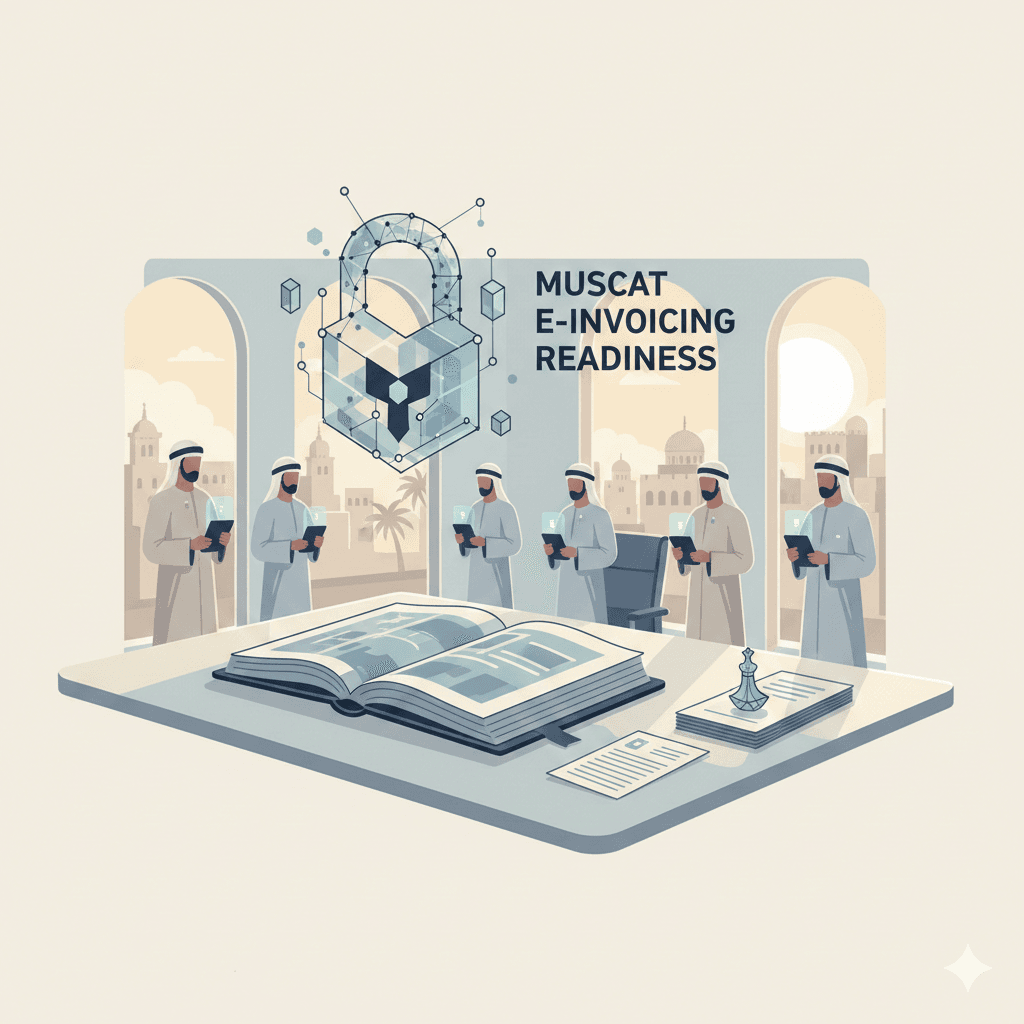
As Oman’s economy digitises, financial data security becomes inseparable from business survival. Muscat Digital Finance Transformation demands not only accurate records but also secure, resilient data architecture. Cyber risks, data breaches, and system failures now pose existential threats to SMEs. A secure finance function integrates access controls, encrypted storage, regular backups, and continuous monitoring. Financial documents, tax records, contracts, and payroll data must be protected with the same rigor as physical assets. Secure digital finance also improves regulatory readiness: auditors and tax authorities increasingly expect structured digital documentation, consistent version control, and reliable audit trails. When finance data is secure and well-organised, businesses respond to regulatory inquiries confidently, without operational disruption. More importantly, secure financial systems allow leadership to base decisions on reliable information, reducing exposure to fraud, error, and reputational damage. Muscat Digital Finance Transformation therefore reinforces financial integrity as the foundation of long-term enterprise stability.
Muscat Digital Finance Transformation and Strategic Advisory Integration
Turning financial data into growth intelligence
Once finance functions are stabilised and secure, their strategic value expands dramatically. Muscat Digital Finance Transformation enables SMEs to leverage financial intelligence for advisory purposes such as feasibility analysis, valuation planning, restructuring, liquidation strategy, and due diligence preparation. Reliable financial data allows business owners to evaluate new markets, investment opportunities, and partnership structures with clarity. Finance managers can model expansion costs, tax implications, and funding requirements with precision. This is where financial transformation moves beyond compliance and becomes a growth engine. Enterprises with mature finance functions navigate economic cycles more effectively, identify inefficiencies earlier, and build stronger negotiation positions with lenders and investors. Under Vision 2040, Omani businesses that integrate financial advisory thinking into daily operations position themselves for scalable, sustainable growth while protecting shareholder value.
Muscat Digital Finance Transformation and the Future of Omani SMEs
Why delay carries measurable risk
The competitive landscape in Oman is tightening. Regulatory standards are rising, financing conditions are becoming more selective, and investor expectations are increasingly sophisticated. Muscat Digital Finance Transformation is no longer optional for SMEs that seek longevity. Those that delay risk compounding operational inefficiencies, compliance exposure, and financial opacity. Over time, this erodes enterprise value, limits funding access, and constrains growth. Conversely, SMEs that invest early in secure, strategic finance functions build resilience against economic volatility and regulatory change. They create internal discipline that supports leadership confidence and stakeholder trust. Under Vision 2040, Omani enterprises that treat finance as strategic infrastructure, not administrative burden, will define the next generation of market leaders.
In conclusion, Vision 2040 places unprecedented responsibility on Omani businesses to modernise their financial foundations. Muscat Digital Finance Transformation provides the practical framework through which SMEs can achieve regulatory confidence, operational clarity, and strategic growth alignment. By integrating secure systems, disciplined governance, and advisory-driven financial intelligence, enterprises strengthen both their internal stability and external credibility.
The SMEs that thrive in Oman’s future economy will not be those with the most technology, but those with the strongest financial architecture. When finance becomes the stabilising core of leadership decision-making, businesses gain the clarity to expand, the confidence to invest, and the resilience to endure. Muscat Digital Finance Transformation is therefore not simply a project, but a leadership commitment to sustainable success in Oman’s evolving economic landscape.
#Leaderly #MuscatDigitalFinanceTransformation #Oman #Muscat #SMEs #Accounting #Tax #Audit