Muscat Vendor Portal Security 2040 and the Future of Secure Business Collaboration Under Vision 2040
Strategic Context of Muscat Vendor Portal Security 2040 for Omani Enterprises
Why vendor portals have become critical financial infrastructure
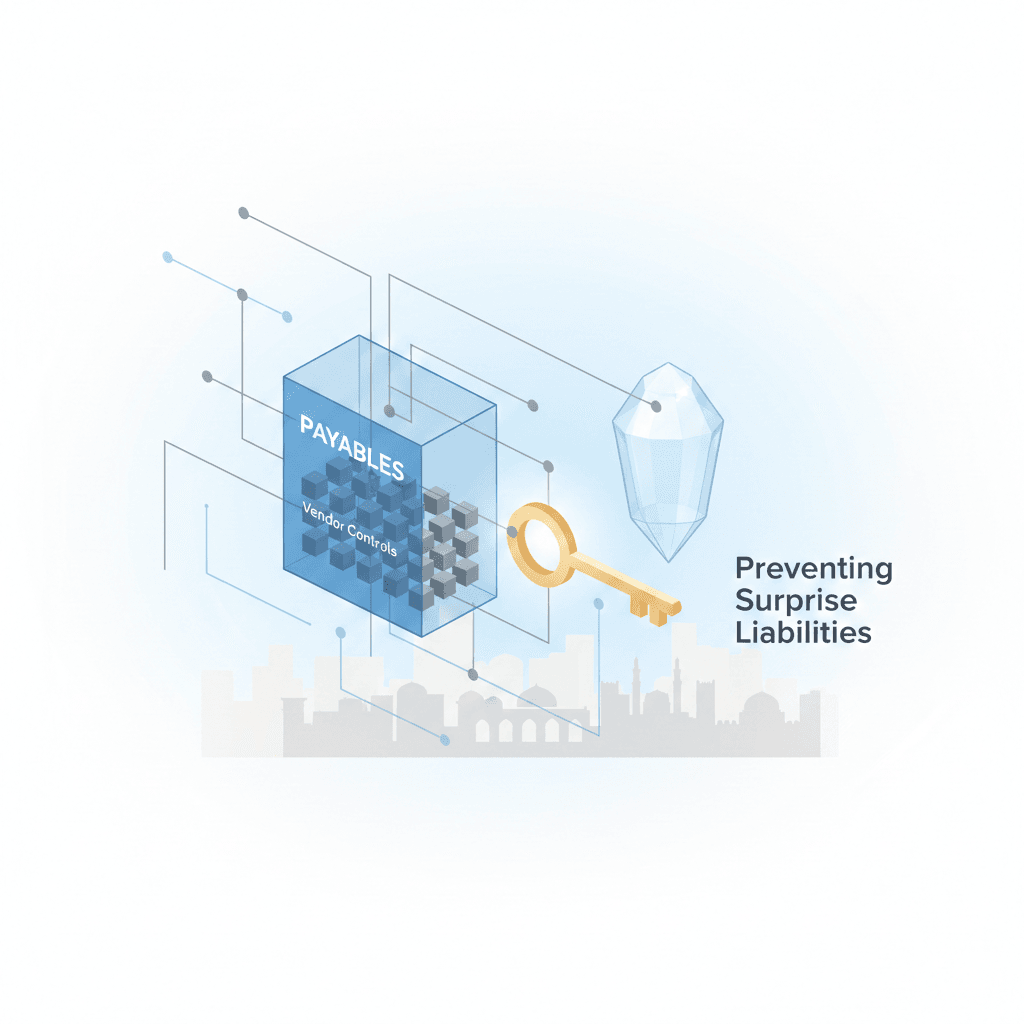
Muscat Vendor Portal Security 2040 has become a defining concern for Omani business leaders navigating the accelerating digital agenda of Vision 2040. As companies in Muscat and across the Sultanate digitize procurement, payments, and supplier collaboration, the vendor portal is no longer just an IT platform; it is core financial infrastructure. Every invoice approved, contract amended, and payment authorized now passes through digital channels that directly affect cash flow, compliance, and enterprise risk. For SME owners and finance managers, this evolution offers efficiency and transparency, but it also introduces new exposures that can destabilize operations if not governed properly. Cyber incidents in supplier systems increasingly lead to real financial losses, disrupted projects, and regulatory scrutiny. In Oman’s tightly connected commercial ecosystem, a weakness in one vendor’s access controls can cascade across multiple businesses. Muscat Vendor Portal Security 2040 therefore demands a strategic mindset, not a technical afterthought. It requires leadership alignment between management, finance, IT, and external advisors to ensure the portal supports growth without undermining trust. Vision 2040 places heavy emphasis on private-sector competitiveness and digital governance; secure vendor collaboration sits precisely at that intersection, making it one of the most consequential operational priorities facing Omani SMEs today.
Risk Landscape Shaping Muscat Vendor Portal Security 2040
From invoice fraud to regulatory exposure
Within the Muscat Vendor Portal Security 2040 framework, the most significant risks are not abstract cyber threats but practical financial and compliance failures. SMEs commonly experience invoice manipulation, unauthorized vendor record changes, compromised credentials, and data leaks involving pricing, contracts, or tax information. These incidents disrupt supply chains, distort financial statements, and trigger disputes that consume management time and capital. Oman’s expanding tax environment, including VAT enforcement and corporate tax compliance, means that inaccurate vendor data or tampered documentation can quickly become a regulatory problem, not just an operational one. Finance managers increasingly find themselves responsible for cybersecurity consequences, even when breaches originate in technical systems. The portal becomes the financial gatekeeper for purchases, expense recognition, and payment authorization. Under Vision 2040, regulators and auditors are paying closer attention to internal controls, data integrity, and governance maturity. Muscat Vendor Portal Security 2040 therefore involves mapping cyber risks directly to financial exposures: what a compromised portal means for revenue, liabilities, tax filings, and audit readiness. Businesses that understand this linkage early gain a significant advantage in resilience and credibility.
Governance Foundations for Muscat Vendor Portal Security 2040
Building control before technology
Effective Muscat Vendor Portal Security 2040 begins with governance rather than software. Before selecting tools or configuring systems, Omani businesses must define ownership, accountability, and control frameworks around vendor data and transactions. This means clearly assigning responsibility between finance, operations, IT, and executive leadership for approving vendors, managing access rights, validating documentation, and reviewing transactions. For SMEs, governance does not require bureaucracy; it requires clarity. Simple policies covering vendor onboarding, data modification approvals, segregation of duties, and incident escalation already establish a strong foundation. These controls support accurate accounting, reliable audits, and smoother tax reporting. Advisory professionals working with Omani enterprises increasingly observe that businesses with well-defined financial governance experience fewer cyber incidents and recover faster when issues occur. Muscat Vendor Portal Security 2040 becomes sustainable only when governance rules are embedded into everyday workflows. Technology then reinforces discipline rather than attempting to replace it. This alignment of governance with digital tools is precisely what Vision 2040 envisions for modern Omani enterprises seeking international credibility and investor confidence.
Technology Architecture Supporting Muscat Vendor Portal Security 2040
Designing systems that protect both data and cash flow
Once governance is established, Muscat Vendor Portal Security 2040 relies on technology architecture that reflects financial priorities. Secure identity management, multi-factor authentication, role-based access, encrypted communications, and continuous activity monitoring become essential components of the portal’s design. Yet for SMEs, technology decisions must remain practical and proportionate. The goal is not sophistication for its own sake but financial protection. The portal should ensure that no single employee can onboard vendors, modify banking details, approve invoices, and release payments alone. Automated validation of vendor documentation, audit trails for every transaction, and real-time alerts for unusual behavior significantly reduce fraud exposure. These controls directly support accounting accuracy and audit readiness. As Omani companies adopt cloud platforms and integrate vendor portals with accounting and ERP systems, the importance of secure architecture multiplies. Weak integration controls often create invisible vulnerabilities that surface only during financial disputes or regulatory reviews. Muscat Vendor Portal Security 2040 therefore requires close coordination between system architects and finance leaders to ensure every technical choice strengthens the enterprise’s financial control environment.
Operationalizing Muscat Vendor Portal Security 2040 in Daily Business
From policy documents to working discipline
Implementing Muscat Vendor Portal Security 2040 is not a one-time project but an ongoing operational discipline. Employees must understand how their daily actions affect financial security and regulatory compliance. Vendor managers need training on document verification. Finance teams must learn to recognize abnormal transaction patterns. Executives should review portal risk reports with the same attention they give to cash flow forecasts. In Oman’s SME sector, where teams are often lean and multitasking is common, embedding security into workflows is more effective than relying on periodic audits alone. Regular internal reviews of vendor master data, quarterly access-rights recertification, and continuous monitoring of transaction logs become part of financial hygiene. External advisors supporting accounting, audit, and taxation increasingly assess vendor portal controls as part of broader business health evaluations. Muscat Vendor Portal Security 2040 thus becomes a living management system that protects revenue, ensures compliance, and supports sustainable growth under Vision 2040’s expanding regulatory expectations.
Financial and Compliance Impact of Muscat Vendor Portal Security 2040
Strengthening credibility with banks, partners, and regulators
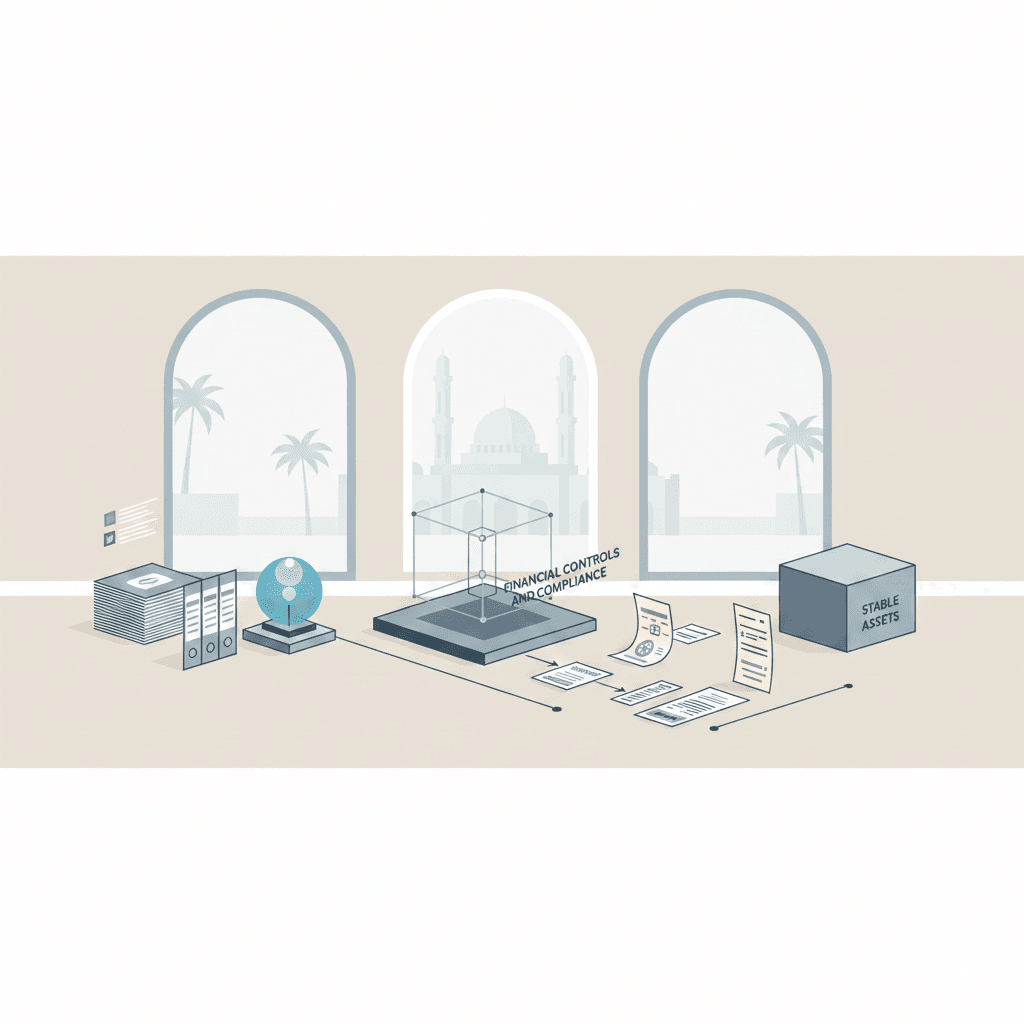
The ultimate value of Muscat Vendor Portal Security 2040 lies in its financial and reputational impact. Secure vendor portals reduce disputes, improve supplier confidence, and strengthen relationships with banks and investors. Clean audit trails simplify statutory audits and due diligence processes, lowering professional fees and accelerating transactions. Accurate vendor data improves VAT reporting, corporate tax compliance, and cash forecasting, directly benefiting financial performance. For Omani SMEs seeking partnerships, government contracts, or external investment, demonstrating mature digital controls has become a competitive differentiator. Vision 2040 places growing emphasis on transparency, governance, and international best practices. Businesses that align their vendor portals with these expectations position themselves as credible, future-ready enterprises. Muscat Vendor Portal Security 2040 therefore functions not merely as protection against loss but as a strategic asset supporting expansion, valuation, and long-term stability in Oman’s evolving economy.
The transformation driven by Muscat Vendor Portal Security 2040 illustrates how digital security, financial governance, and business growth are now inseparable for Omani enterprises. Under Vision 2040, vendor portals sit at the center of procurement, payments, compliance, and strategic partnerships. When properly governed and secured, they enhance transparency, protect cash flow, and reinforce trust across the supply chain. For SMEs, this integration of technology and financial control is not an abstract ideal but a practical requirement for sustainable operation in Muscat’s increasingly regulated and competitive business environment.
By approaching Muscat Vendor Portal Security 2040 as a core management responsibility rather than an IT project, business owners and finance managers can strengthen their organizations from the inside out. The result is more reliable financial reporting, smoother audits, stronger tax compliance, and greater confidence from partners and regulators. In the long run, these benefits translate directly into resilience, scalability, and enterprise value, which is exactly the kind of transformation Vision 2040 aims to deliver for Oman’s private sector.
#Leaderly #MuscatVendorPortalSecurity2040 #Oman #Muscat #SMEs #Accounting #Tax #Audit